Adjustable Beds • Canadian Sleep Guide
A Canadian Guide to Elevation, Support, and Sleep Surfaces
An adjustable bed changes more than the outline of a mattress. It shifts the angle of the surface beneath you, asking the bed’s frame, mattress, bedding, and room to work together in new ways. For Canadians considering this kind of setup, the practical questions are often the most important: Will the mattress bend comfortably? Does the base fit the room and existing frame? And do the available positions actually suit everyday routines?
These questions matter whether you are exploring a small adjustment for reading, looking for a more comfortable position at rest, or planning a bedroom that can adapt as needs change. An adjustable base is not automatically a solution for pain or poor sleep, and more movement does not necessarily mean better support. Understanding how the components interact can help you decide whether an adjustable bed belongs in your home.
What an adjustable bed changes
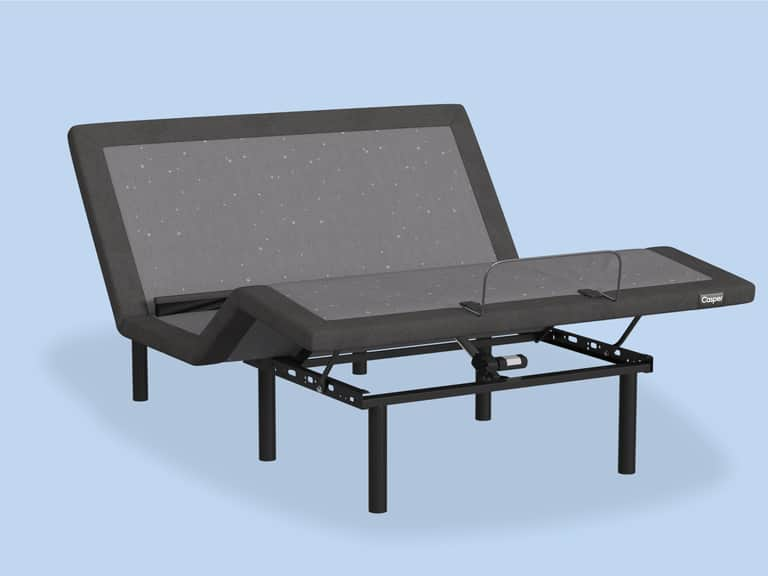
A conventional bed supports the body on a flat plane. An adjustable base introduces hinges and motors that can raise the head, the feet, or both. Some models offer a limited number of preset positions; others let users make gradual changes with a remote. The mattress follows the frame as it moves, creating a range of sleeping and resting angles rather than a single horizontal surface.
This movement can be useful for more than sleep. Some people enjoy raising the head to read or watch a screen, while others appreciate being able to elevate their legs for a short period of rest. A split configuration can let people sharing a bed adjust their own side independently, if the base and mattress arrangement support that setup.
Still, a base is only one part of the sleep system. Its usefulness depends on the mattress’s ability to flex, the frame’s dimensions and support requirements, the sleeper’s preferences, and the room’s practical limitations. A feature list can describe what a base does; it cannot tell you whether its positions feel comfortable or make sense for your household.
Begin with your reasons, not the remote
Before comparing articulation features, identify the situations you hope to improve. Is the goal a comfortable position for reading before sleep? A separate adjustment for each partner? A change in how you relax in bed? Being specific helps distinguish a useful feature from one that sounds impressive but may rarely be used.
Try describing an ordinary evening and morning. Consider how you get into bed, when you tend to change position, whether you read or use a device, and what makes it easier to get settled. If another person shares the bed, include their preferences in the conversation. A setting that feels natural to one person may feel awkward to another.
Where the reason is related to a medical condition, pain, breathing, circulation, or recovery, an adjustable base should not be treated as a diagnosis or a substitute for care. Ask an appropriate health professional whether a particular position or equipment change makes sense for your circumstances. Needs vary, and general product information cannot establish what is safe or effective for an individual.
Articulation: what moves, and how?
“Articulation” describes the way a bed base changes the angle of its sections. Head and foot elevation are the most familiar adjustments, but the number of positions and the range of movement vary. Some controls offer simple up-and-down operation; others include saved presets, a flat-return button, or named positions. Features such as massage, lighting, wireless controls, and charging ports may be convenient, but they are separate from the central question of how the surface moves and feels.
When comparing adjustable beds in Canada, ask practical questions about the controls. Are buttons easy to distinguish in a dim room? Can the base be returned to flat quickly? Does the remote require a direct line of sight? Is a wired control available, or does the system depend on batteries or wireless pairing? If several people will use the bed, think about whether each person can operate it comfortably.
Pay attention to movement in the room as well as movement on the bed. A raised head section can change your distance from a bedside table, lamp, or wall. A foot section in motion may affect storage beneath the bed or nearby furniture. Even a quiet mechanism can create a new routine: a cable might need securing, a remote might need a consistent home, and bedding may need straightening after adjustment.
Specifications can help narrow choices, but they are not a substitute for trying the controls when possible. If an in-person test is unavailable, look for clear instructions, a diagram showing the moving sections, and written details about assembly, operating limits, warranty coverage, and service arrangements in Canada.
The mattress has to bend with the base
Mattress compatibility is one of the most important checks in an adjustable-bed setup. When the base rises, the mattress must flex without resisting the frame, shifting excessively, or becoming uncomfortable. Construction, thickness, firmness, internal layers, and the manufacturer’s stated use can all affect how a particular mattress responds.
Do not assume that a mattress will work simply because it feels flexible when pressed by hand. The manufacturer may set conditions for use with an adjustable base, and those instructions take precedence over general assumptions. Check the exact mattress model, not only its material category or brand. If its documentation is unclear, ask the manufacturer or retailer to confirm compatibility in writing.
Consider how the mattress feels when elevated. A surface that seems comfortable while flat may feel different when the body is angled. Depending on the design and the position, you may notice more pressure around the hips or shoulders, a change in how your body settles, or movement in the bedding. A brief trial can reveal impressions that product descriptions cannot.
Also ask how the mattress is kept in place. Some bases use a retainer bar or other mattress-restraint system. Confirm that the restraint is appropriate for the mattress and that it can be fitted and used as directed. Avoid improvised fasteners or modifications that might interfere with safe movement or affect a warranty.
If you are keeping an existing mattress, verify its compatibility before buying a base. If you are choosing both at once, treat them as a matched system: check the base manufacturer’s requirements, the mattress maker’s guidance, and the effect of any separate frame or foundation placed around or beneath the mechanism.
Support is a system, not a setting
People often use “support” to mean several different things: a stable foundation, a mattress that feels comfortable, or a sleeping position that suits their body. An adjustable base changes the position of the surface, but it does not automatically make an unsuitable mattress supportive. Nor does a preset position guarantee a particular health outcome.
Notice the relationship between your head, shoulders, hips, and legs in each position. Does your body feel settled, or are you bracing to stay in place? Do you feel pressure building at one point? Can you relax without pulling at the sheets or adjusting pillows repeatedly? These observations are more useful than trying to match a setting to a label such as “zero gravity,” which is a product term rather than a promise of a specific result.
Pillows and bedding also influence alignment. A pillow that works while lying flat may place the head at an uncomfortable angle when the upper body is raised. Bedding can tug, bunch, or restrict movement as the mattress bends. Make small, gradual adjustments and give yourself time to notice how each configuration feels. If a position causes discomfort or symptoms, return to a comfortable position and seek appropriate advice when needed.
Room layout and Canadian home realities
A base must fit the room not just when flat, but while moving. Measure the bedroom, doorways, hallways, stairwells, and any tight turns on the delivery route. A bed may fit neatly in its final position yet prove difficult to carry into an older house, an apartment, or a room reached by a narrow staircase. Ask about delivery requirements and whether installation is included or available.
Allow space for the base to articulate and for people to move safely around it. Check where the headboard, nightstands, wall outlets, heating vents, and curtains sit. Cables should be routed according to the instructions and kept clear of pinch points and moving parts. If the bed is near a wall, confirm that the mechanism’s movement does not bring the mattress or frame into contact with it.
Canadian homes present a wide range of conditions, from compact urban bedrooms to rural houses with different access challenges. Seasonal changes may also influence the room environment: heating can dry indoor air in winter, while humid summers can affect comfort and bedding choices. These factors do not determine whether an adjustable base is suitable, but they are part of the wider sleep setting. Consider ventilation, temperature, and the practical care instructions for the mattress and linens.
Before installation, check the floor surface and electrical access. Confirm the base’s power requirements and the manufacturer’s guidance for outlets, extension cords, and surge protection. Do not place the mechanism where water, loose rugs, or stored objects could interfere with operation. Follow the assembly and safety instructions rather than improvising a setup to fit the room.
Will it work with your existing bed frame?
Some adjustable bases are designed to sit inside an existing bed frame; others are intended to stand on their own legs or connect to a particular support structure. These arrangements are not interchangeable by default. Check the base’s installation instructions for required clearances, leg or rail support, centre support, and any restrictions on enclosing the mechanism.
A decorative frame can also create practical complications. Rails may block movement, a low footboard can interfere with elevation, or a headboard may need separate attachment hardware. Ask whether the existing frame is compatible with the specific base and mattress combination. If the answer is uncertain, measure carefully and request a diagram or written confirmation before removing or modifying furniture.
Weight limits and assembly requirements deserve equal attention. Confirm that the base is suitable for the intended users and the total load described by the manufacturer. Follow instructions about how many people are needed to lift or assemble it; adjustable bases contain moving components and can be awkward to handle. If installation is included, clarify what the service covers, including removal of packaging and placement in the chosen room.
Bedding, pillows, and everyday care
Sheets and blankets need enough room to move with the mattress without coming loose or pulling tightly across raised sections. Deep-pocket sheets may fit some thicker mattress-and-base combinations, but pocket depth alone does not guarantee a secure fit. Check the mattress dimensions, height, and sheet manufacturer’s instructions, then observe whether corners remain in place through normal adjustment.
Keep pillows and loose bedding away from moving joints and mechanisms. If the base has storage or a frame enclosure, do not allow fabric or objects beneath the bed to obstruct its travel. Use only cleaning methods recommended for the base and mattress; moisture or cleaning products can damage electrical parts or surface materials.
Routine checks can help keep the arrangement manageable. Look for loose bedding, displaced cables, and objects that have drifted under the bed. If the base makes an unusual sound, moves unevenly, or stops responding, stop using it as directed by the manufacturer and consult the support instructions. Do not reach into a moving mechanism or attempt repairs without authorization.
A product example, considered in context
One example of a feature-rich option is the Adjustable Base Pro. Its listed features include head and foot adjustment, lumbar presets, a Zero Gravity position, three-level massage, wireless control, and USB ports. The product description also says it can fit into existing frames and can be configured as a Split King. Those details may help readers form questions about controls, independent adjustment, and frame fit; they do not replace checking compatibility with the exact mattress and room setup.
When assessing any model, separate essential requirements from optional conveniences. First verify mattress compatibility, dimensions, installation, controls, operating limits, warranty, and service availability. Then decide whether additional functions matter to your daily routine. A feature is useful when it addresses a real need and can be operated safely—not merely because it appears on a specification sheet.
Questions to ask before deciding
A short checklist can make comparison easier. Bring the mattress model name, room measurements, and details about the current frame when asking questions. For a Canadian purchase, confirm that delivery, setup, warranty service, and replacement parts are available for your location.
- Is my exact mattress model approved for use with this adjustable base?
- Which sections move, and how are the available positions controlled?
- Can the base be installed in my current frame, and are there clearance requirements?
- Will the bed fit through the delivery route and leave safe space in the bedroom?
- How does the mattress stay in place during movement?
- Are the remote, power system, and cables straightforward to use and maintain?
- What are the weight limits, assembly instructions, and safety precautions?
- What do the warranty, returns, and service arrangements cover in Canada?
- Which features would I use regularly, and which are simply optional?
When possible, test the base with a comparable mattress and spend enough time in more than one position to notice changes in comfort. If trying a demonstration model is not possible, seek a clear trial policy and carefully read its terms. Ask specifically about return logistics for a heavy, assembled item.
Making a considered choice
An adjustable bed is best understood as a flexible foundation within a larger sleep environment. Its value depends on the match between movement, mattress, bedding, room, and the people who use it. A well-chosen system may make certain resting positions or bedtime activities more convenient, but it cannot guarantee better sleep or resolve a health problem on its own.
Take time to verify the details that are easiest to overlook: the exact mattress model, clearance around moving parts, the route into the bedroom, and the terms of local service. Then weigh those facts against your everyday reasons for considering a change. For some households, a simple flat bed remains the right fit. For others, the ability to adjust elevation may offer a practical kind of flexibility.
The most useful comparison is not between the longest feature lists. It is between the system that works on paper and the one that can function safely and comfortably in your home, night after night.